
Pearl Pigment Myths: 7 Facts That May Surprise You
November 6, 2026 | by Himanshi Sagar
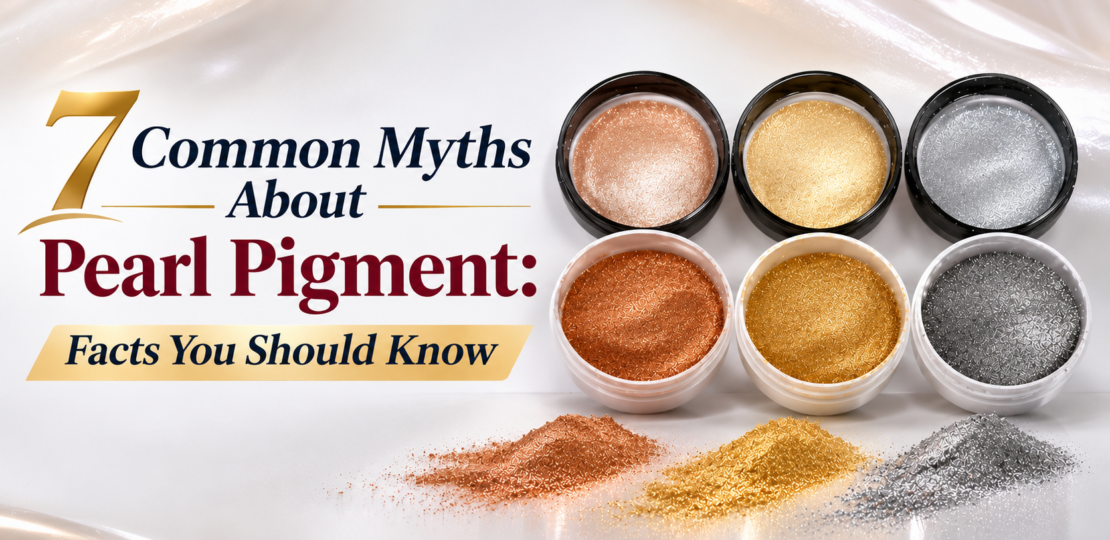
7 Common Myths About Pearl Pigment: Facts You Should Know
Pearl pigments are widely used to create attractive finishes, shimmering surfaces, and premium colour effects across different industries.
Despite their growing use, several misconceptions still exist about Pearl Pigment Myths. Some people believe they are available only in white and silver, while others think they work only on decorative products or require large quantities to produce a noticeable shine.
These misunderstandings can lead to incorrect product selection, poor application results, and unnecessary production costs.
Understanding the facts behind these misconceptions helps manufacturers, product developers, and buyers choose the right pigment for their requirements.
What Are Pearl Pigments and How Do They Work?
Many conventional pearl pigments are manufactured using thin layers of metal oxides, such as titanium dioxide or iron oxide, deposited onto transparent plate-like materials such as natural mica or synthetic mica.
Unlike ordinary colour pigments, which mainly create colour through light absorption and scattering, pearl pigments produce their distinctive appearance through light reflection, transmission, and optical interference.
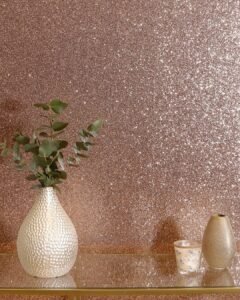
How Pearl Pigments Create Their Colour Effects
When light reaches a pearl pigment particle, some light reflects from its surface while another portion travels through the transparent layers and reflects from different internal boundaries.
These reflected light waves interact with each other. Depending on the coating thickness and optical properties, certain wavelengths are reinforced, producing different pearl and interference colours. Now, let’s separate the Pearl Pigment Myths.
The final appearance depends on several factors:
Particle size: Influences smoothness, lustre, sparkle, and visual texture.
Coating thickness: Helps determine the resulting interference colour.
Base colour: Changes the final appearance of transparent pearl pigments.
Pigment concentration: Influences the intensity and uniformity of the effect.
Application method: Affects particle orientation and the final surface finish.
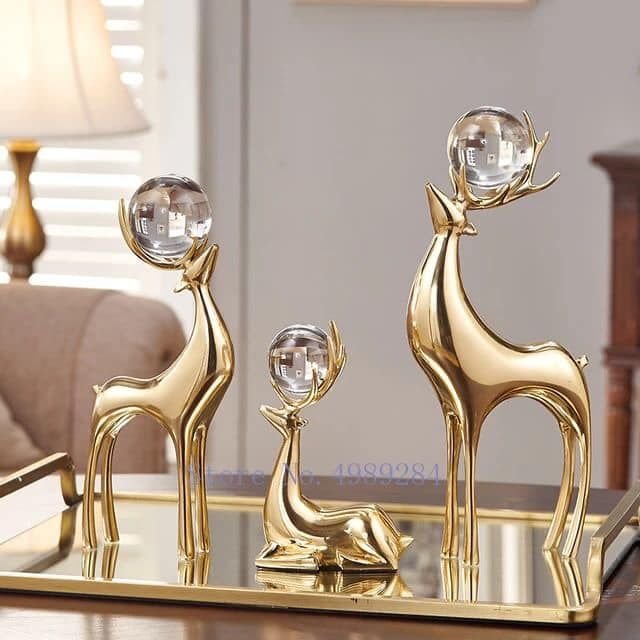
7 Common Pearl Pigment Myths
Myth 1: Pearl Pigments Are the Same as Ordinary Colour Pigments
Fact: Pearl pigments create special optical effects that ordinary colour pigments generally do not produce.
Ordinary colour pigments primarily provide colour through selective absorption and scattering of light. Pearl pigments use their layered structure to create reflection, interference, and a characteristic lustrous appearance.
The right choice depends on whether the application needs solid colour, special visual effects, or both.
Myth 2: Pearl Pigments Are Used Only for Decorative Products
Fact: Pearl pigments are used across several industrial and commercial sectors.
Another misconception is that pearl pigments are suitable only for decorative items, crafts, or luxury products.
In reality, their applications extend far beyond decoration.
Manufacturers use pearl pigments to improve the visual appeal of products while maintaining the functional requirements of their respective materials.
Myth 3: All Pearl Pigments Produce the Same Finish
Fact: Different pearl pigment grades create different levels of shine, sparkle, and colour intensity.
Not all pearl pigments are designed to produce an identical appearance.
Their final visual effect depends on particle size, substrate type, metal oxide coating, and the formulation in which they are used.
For example:
- Fine particle grades: Generally create smoother, softer, and more satin-like finishes.
- Medium particle grades: Can provide balanced lustre and visible pearl effects.
- Coarser particle grades: Often produce stronger sparkle and a more noticeable visual texture.
Myth 4: Adding More Pearl Pigment Always Produces More Shine
Fact: Excessive pigment concentration can reduce the desired pearlescent effect.
It is natural to assume that adding more pigment will automatically create a stronger shine.
However, this is not always true.
Pearl pigments are plate-like particles. For the best optical effect, these particles generally need to orient appropriately within the coating or application system.
When excessive quantities are added, particles may become overcrowded and interfere with one another. This can affect their orientation and reduce the uniformity of reflected light.
Other problems may include:
- Uneven pigment distribution
- Reduced surface smoothness
- Poor dispersion
- Increased formulation costs
- Inconsistent colour appearance
The ideal concentration depends on the pigment grade, particle size, binder system, base colour, and application method.
Myth 5: Pearl Pigments Are Not Durable
Fact: Properly selected pearl pigments can provide good durability in suitable applications.
Some buyers believe that pearl pigments lose their shine quickly or are unsuitable for products exposed to environmental and processing conditions.
This assumption is too broad.
The durability of a pearl pigment depends on its composition, surface treatment, quality, and compatibility with the application system.
Important performance factors include:
- Light and weather resistance
- Heat stability
- Chemical resistance
- Moisture exposure
- Binder compatibility
- Processing temperature
- Storage and application conditions
It is important to remember that pigment durability and the durability of the complete finished product are not the same thing. The binder, substrate, and overall formulation also influence the final result.

How to Choose the Right Pearl Pigment for Your Application
Before purchasing pearl pigments, consider the following points:
Identify the application: Determine whether the pigment will be used in plastics, coatings, inks, textiles, cosmetics, or decorative materials.
Decide the desired finish: Choose between soft pearl, silver-white, metallic lustre, sparkle, or interference effects.
Check particle size: Select a grade according to the required surface appearance and application equipment.
Verify compatibility: Confirm that the pigment is suitable for the selected binder, resin, or polymer.
Conclusion
Pearl pigments offer manufacturers a versatile way to create attractive finishes, distinctive colour effects, and premium-looking products. However, misconceptions about their colour range, durability, concentration, and applications can lead to incorrect product selection.
Despite Pearl Pigment Myths, understanding how pearl pigments work and what influences their performance makes it easier to choose the right grade for different industrial requirements.
Whether you manufacture plastic products, paints, coatings, printing inks, textiles, or decorative materials, selecting a suitable pigment and testing its compatibility are essential steps towards achieving consistent results. Visit Amp Pearl Pigment Ltd.
FAQ
Pearl Pigment Powder is a mica-based pigment with a shimmering, pearlescent effect. It is widely used in industries like plastics, coatings, cosmetics, printing inks, and more to enhance visual appeal and create a metallic or iridescent finish.
Pearl Pigments are versatile and used in:
- Plastics: For decorative plastic products.
- Coatings: Automotive, industrial, and decorative coatings.
- Cosmetics: Nail polish, eyeshadows, and lip products.
- Printing Inks: For screen printing, gravure, and flexographic printing.
- Textiles: For fabric printing and dyeing.
Yes, Amp Pearl Pigment Ltd offers customizable shades and particle sizes of Pearl Pigments to meet specific industry needs.
Yes, our cosmetic-grade Pearl Pigments are non-toxic and safe for use in beauty products. They comply with relevant industry safety standards.
We provide packaging options ranging from small sample packs to bulk packaging based on your requirements.
RELATED POSTS
View all


High-Quality Pearl Pigments for Soap Manufacturers
November 22, 2024 | by Amp Pearl pigment


Chameleon Pearl Pigment: Top 6 Uses & Benefits Explained
April 27, 2026 | by Himani Sara